
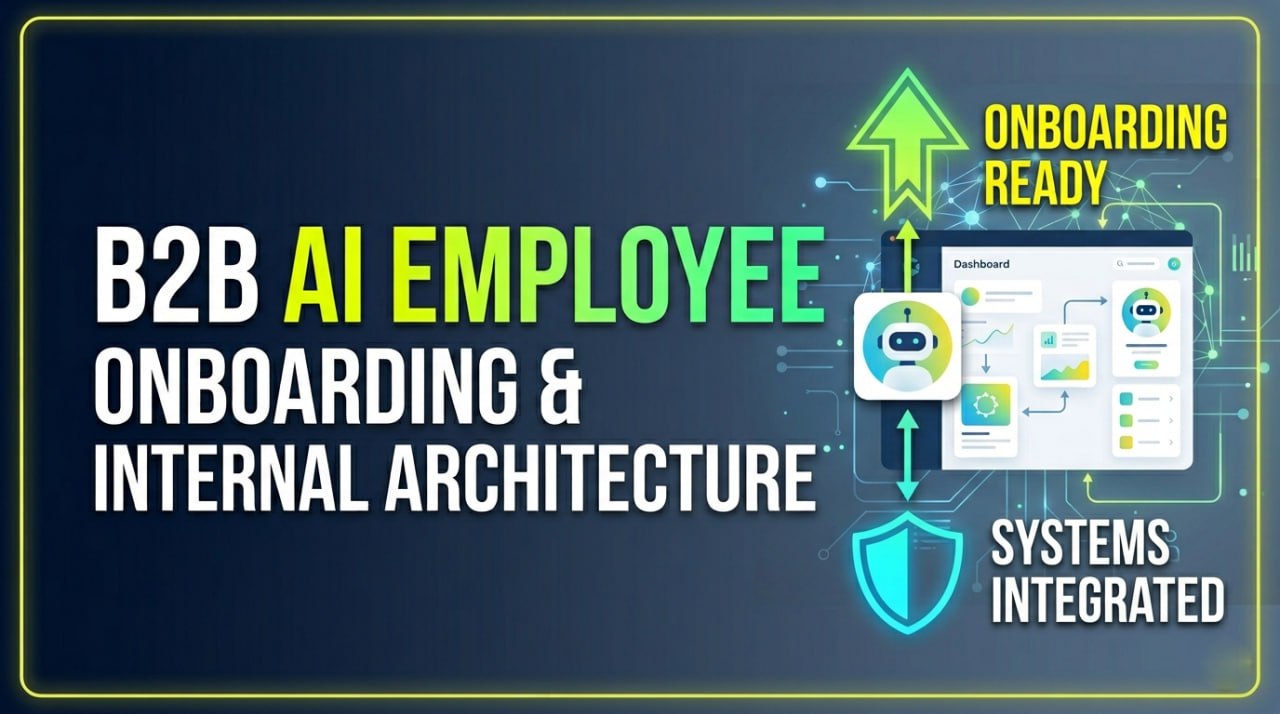
AI Employee Onboarding System: The Ultimate Guide to Building a Profitable B2B Automation Business in 2026
Introduction
In 2026, businesses are growing faster than ever, but one challenge continues to slow them down: employee onboarding. Every new hire requires training, documentation, access permissions, company policy explanations, and ongoing support. Traditional onboarding methods rely heavily on HR teams and senior employees, resulting in lost productivity, repeated questions, and unnecessary operational costs.
This is exactly why the demand for an AI employee onboarding system has exploded across industries. Companies are actively searching for smarter ways to train employees, organize internal knowledge, and automate repetitive support requests.
An AI employee onboarding system acts as a private company knowledge assistant that can instantly answer employee questions, provide onboarding guidance, explain internal procedures, and help staff locate information without constantly interrupting managers or HR personnel.
The best part? Businesses are willing to pay thousands of dollars for these systems because they directly save time, reduce operational costs, and improve employee productivity.
If you’re looking for a high-ticket B2B opportunity in 2026, building and implementing an AI employee onboarding system could become one of the most profitable service businesses available.
Why the AI Employee Onboarding System Market Is Booming
Modern companies face several major challenges:
- Employee turnover is increasing.
- Remote teams are becoming standard.
- Internal documentation is scattered across dozens of tools.
- Managers spend hours answering repetitive questions.
- New hires often require weeks to become fully productive.
An AI employee onboarding system solves all of these problems.
Instead of searching through documents or messaging supervisors, employees simply ask the AI assistant questions such as:
- How do I submit an expense report?
- Where can I find company templates?
- What is our client communication policy?
- How do I request vacation leave?
- What software tools do we use?
The system instantly provides answers based on the company’s internal knowledge base.
This creates significant value for organizations and positions you as a critical business automation consultant rather than just another freelancer.
Step-by-Step Guide
Step 1: Identify Businesses With Onboarding Problems
Not every company needs an AI employee onboarding system.
The best prospects include:
- Software companies
- Marketing agencies
- Accounting firms
- Legal consultancies
- Healthcare organizations
- Logistics businesses
- Remote-first startups
- Customer support teams
Focus on companies with 20 to 200 employees.
Businesses at this stage often experience rapid growth and struggle to keep internal processes organized.
A company hiring 5 to 10 employees every month can save hundreds of hours annually through automation.
Step 2: Collect and Organize Internal Knowledge
Every AI employee onboarding system depends on high-quality information.
Work with the client to gather:
- Employee handbooks
- Training materials
- Standard operating procedures
- Company policies
- HR documents
- Internal templates
- Video training transcripts
- Knowledge base articles
Most companies already have this information.
The problem is that it is scattered across multiple platforms.
Your job is to centralize and structure everything into a clean knowledge repository.
Many consultants use tools such as Notion, Google Drive, or secure databases before connecting them to AI systems.
For workflow automation ideas, you can also explore:
https://digitalcashguide.com/ai-powered-drop-servicing-agency/
Step 3: Build the AI Employee Onboarding System
Once the information is organized, the next step is building the AI assistant.
Modern no-code AI platforms make this process surprisingly simple.
The system should:
- Search company documents
- Answer employee questions
- Provide onboarding guidance
- Explain company policies
- Suggest relevant resources
- Maintain conversation history
The objective is creating an experience where employees receive instant support 24/7.
This dramatically reduces the burden on HR teams and department managers.
Step 4: Integrate Into Existing Workflows
A successful AI employee onboarding system should fit naturally into daily operations.
Popular integrations include:
- Slack
- Microsoft Teams
- Internal web portals
- Employee dashboards
- Mobile applications
Instead of forcing employees to learn another platform, bring the AI assistant directly into tools they already use every day.
This significantly increases adoption rates and client satisfaction.
Learn more about collaboration platforms:
Step 5: Security and Access Controls
Security is a major selling point.
Many companies hesitate to adopt AI because they fear sensitive information could be exposed.
Your AI employee onboarding system should include:
- Role-based permissions
- Data encryption
- Department-level access restrictions
- Audit logs
- Secure authentication
For example:
A junior employee should not have access to executive compensation data.
A sales representative should not access legal contract archives.
Strong security measures immediately increase the perceived value of your solution.
Step 6: Employee Training and Launch
Even the best technology fails if employees do not know how to use it.
Conduct onboarding workshops covering:
- How to ask effective questions
- Finding documents
- Using search features
- Reporting incorrect answers
- Accessing department-specific resources
Most companies can fully train their workforce within a single 60-minute session.
After launch, employees typically begin using the AI employee onboarding system immediately because it solves real daily frustrations.
Pricing Your AI Employee Onboarding System Services
One reason this business model is attractive is its pricing flexibility.
Setup Fee Model
Charge a one-time implementation fee:
- Small companies: $2,000–$4,000
- Medium companies: $4,000–$8,000
- Larger organizations: $8,000+
Monthly Retainer Model
Offer ongoing maintenance:
- Knowledge base updates
- AI optimization
- Usage monitoring
- Security audits
- New employee training
Monthly retainers often range from:
- $300 to $1,000+
This creates predictable recurring revenue.
How to Find Your First Clients
Many consultants overcomplicate client acquisition.
Start simple.
Reach out to:
- LinkedIn business owners
- Agency founders
- HR directors
- Operations managers
- Startup CEOs
Focus on the financial impact.
Instead of saying:
“We build AI chatbots.”
Say:
“We help companies reduce employee onboarding time by up to 70% using custom AI employee onboarding systems.”
Business owners care about results, not technology.
For lead generation strategies, read:
https://digitalcashguide.com/high-ticket-b2b-lead-generation/
Scaling Your Business
Once you complete several projects, scaling becomes much easier.
You can create:
- Industry-specific onboarding templates
- Pre-built knowledge base structures
- Standard implementation frameworks
- Automated deployment systems
Over time, what initially takes weeks can eventually be completed in just a few days.
This dramatically increases profit margins.
Many successful consultants eventually transform their service into a SaaS product, allowing them to serve hundreds of businesses simultaneously.
Tips for Success
Focus on ROI
Always demonstrate how the AI employee onboarding system saves time and money.
Executives buy outcomes, not software.
Specialize by Industry
Choose one niche:
- Law firms
- Medical clinics
- Marketing agencies
- Software companies
Specialization helps you charge premium rates.
Create Case Studies
Document:
- Time saved
- Questions answered
- Productivity improvements
- Employee satisfaction gains
These become powerful sales assets.
Offer Ongoing Support
Most businesses prefer long-term partners instead of one-time vendors.
Monthly optimization retainers can become a major revenue stream.
Warnings
Avoid Public AI Systems for Sensitive Data
Never upload confidential corporate documents to unsecured public tools.
Always prioritize privacy-first solutions.
Prevent Outdated Information
An AI employee onboarding system is only as good as its knowledge base.
Regular updates are essential.
Do Not Oversell
AI is powerful but not magical.
Set realistic expectations and focus on measurable improvements.
Test Everything Thoroughly
Employees will quickly lose trust if the system provides incorrect information.
Perform extensive testing before launch.
Conclusion
The AI employee onboarding system industry is rapidly becoming one of the most valuable B2B opportunities in 2026. As organizations continue to scale, they need faster ways to train employees, distribute knowledge, and reduce operational bottlenecks.
By helping businesses implement a secure and efficient AI employee onboarding system, you position yourself as a high-value automation consultant capable of generating significant business outcomes. Unlike traditional freelancing, this model allows you to build recurring revenue through setup fees, monthly retainers, and ongoing optimization services.
Companies will always need better onboarding, better documentation, and better internal communication. Those who master the AI employee onboarding system market today will be perfectly positioned to benefit from the next wave of enterprise AI adoption.
FAQ Section
Q: What is an AI employee onboarding system?
A: An AI employee onboarding system is a private company knowledge assistant that helps employees find information, learn company procedures, and receive onboarding support instantly.
Q: How much can I charge for building an AI employee onboarding system?
A: Most consultants charge between $2,000 and $8,000 for setup, plus monthly retainers ranging from $300 to $1,000 or more.
Q: Do I need advanced coding skills?
A: No. Modern no-code AI platforms allow you to build sophisticated onboarding systems without becoming a software engineer.
Q: What types of companies need this service most?
A: Software companies, agencies, healthcare providers, legal firms, logistics businesses, and rapidly growing startups are excellent targets.
Q: Is employee data secure?
A: Yes, provided you implement enterprise-grade security practices, encrypted storage, and proper access controls.
Q: How long does implementation take?
A: Most AI employee onboarding system projects can be completed within one to three weeks depending on company size and documentation quality.
Suggested Image Alt Text
- AI employee onboarding system dashboard
- AI employee onboarding system for businesses
- Best AI employee onboarding system 2026
- Corporate AI employee onboarding system
- AI employee onboarding system workflow
