
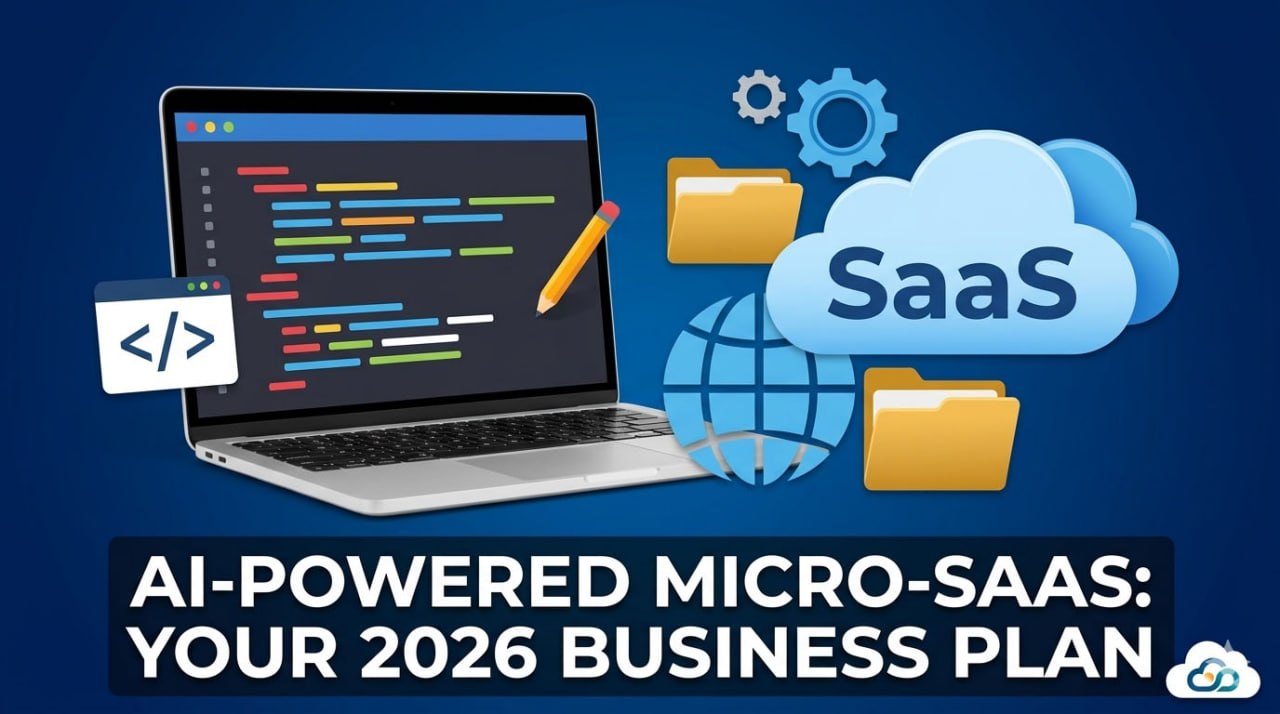
Micro SaaS Agency 2026: Powerful Guide to Building an AI-Powered Recurring Revenue Business
Learn how to build a Micro SaaS Agency 2026 using AI tools, automation, and subscription-based software solutions. Discover how to create recurring revenue and scale beyond freelancing.
https://digitalcashguide.com/micro-saas-agency-2026
Introduction: Why Micro SaaS Agency 2026 Is One of the Biggest Opportunities Today
The software industry is changing rapidly. In the past, building software products required large development teams, significant funding, and months or even years of development. In 2026, that reality looks very different.
The rise of Artificial Intelligence, no-code platforms, and AI coding assistants has dramatically reduced the barriers to entry. Today, a solo entrepreneur or freelancer can launch a profitable software product without hiring a full team.
This is where the Micro SaaS Agency 2026 model becomes incredibly powerful.
Instead of building massive platforms that try to serve everyone, Micro SaaS businesses focus on solving one specific problem for one specific audience. These tools are simpler, faster to build, easier to maintain, and often generate recurring monthly revenue through subscriptions.
For freelancers tired of constantly trading time for money, a Micro SaaS agency offers an attractive alternative. Rather than chasing new clients every month, you can build software assets that continue generating income long after the initial development work is complete.
In this guide, you’ll learn how to identify opportunities, build AI-powered software products, attract customers, and create a sustainable recurring revenue business.
Step 1: Identify High-Value Problems Worth Solving
Every successful Micro SaaS starts with a problem.
The best opportunities are often hidden inside repetitive manual tasks that businesses perform every day.
The “Point A to Point B” Framework
Ask yourself:
- What tasks take employees more than 30 minutes per day?
- Which processes involve repetitive data entry?
- Where are businesses wasting time and money?
- Which tasks create frequent human errors?
These problems create opportunities for automation.
Examples of Micro SaaS Ideas
- Appointment reminder systems for dental clinics
- Booking management tools for boutique hotels
- Lead tracking systems for real estate agents
- Automated invoice generators for freelancers
- Customer follow-up tools for local service businesses
The more specific your target audience, the easier it becomes to market your solution.

Why Vertical SaaS Wins
Many entrepreneurs make the mistake of building general-purpose tools.
Instead of creating another Slack or Trello competitor, focus on niche industries.
Examples:
- Hotel Management Software for Sri Lankan Boutique Hotels
- Scheduling System for Independent Dental Clinics
- Client Tracking Tool for Freelance Consultants
- Property Inquiry Manager for Real Estate Agencies
Specific solutions often outperform broad solutions because they address highly targeted pain points.
Step 2: Rapid Prototyping with AI
One of the biggest advantages of a Micro SaaS Agency 2026 is speed.
What once required months of coding can now be accomplished in days.
AI Coding Assistants
Popular tools include:
- ChatGPT
- GitHub Copilot
- Cursor
- Claude
These tools can generate:
- User authentication systems
- Database structures
- API integrations
- Dashboard components
- Payment processing logic
This dramatically reduces development time.
Build the Minimum Viable Product (MVP)
Many founders waste time trying to build perfect software.
Instead, focus on building the simplest version that solves the core problem.
Ask:
“What is the smallest version of this product that delivers value?”
Launch that first.
Then improve based on customer feedback.
Validate Before Building Everything
Before investing significant time:
- Create a landing page
- Explain the solution
- Collect email addresses
- Talk to potential customers
Validation reduces risk and prevents wasted effort.

Step 3: Create a Productized User Experience
Software succeeds when it is easy to use.
Many powerful tools fail because users become confused.
Focus on Simplicity
Your users do not care about technical complexity.
They care about results.
Ask:
- Can users achieve their goal quickly?
- Is the interface easy to understand?
- Can a beginner use the tool without training?
Design with Utility First
Avoid unnecessary features.
Every button should have a purpose.
Every screen should solve a problem.
Modern AI design tools can help generate:
- Dashboard layouts
- UI concepts
- Design systems
- Wireframes
However, always review the final design from a user’s perspective.
Customer Success Matters
A simple product often outperforms a complicated one.
The easier your software is to use, the lower your support burden becomes.
Step 4: Implement a Subscription-Based Revenue Model
The biggest advantage of the Micro SaaS Agency 2026 model is recurring revenue.
Instead of receiving a one-time payment, customers subscribe monthly.
Why Recurring Revenue Is Powerful
Traditional freelancing:
- Complete project
- Get paid once
- Find another client
Micro SaaS:
- Acquire customer
- Receive monthly payments
- Retain customer long term
This creates predictable income.
Common Pricing Models
Starter Plan
Perfect for individuals and small businesses.
Professional Plan
Designed for growing companies.
Enterprise Plan
For organizations requiring advanced features and support.
Price Based on Value
Never price based solely on software complexity.
Instead ask:
“How much money or time does this save the customer?”
If your tool saves a business $1,000 monthly, charging $49-$99 per month becomes an easy decision.
Step 5: Automate Support and Operations
The goal is to build a business, not another full-time job.
Automation allows you to scale without dramatically increasing workload.
AI-Powered Documentation
Create:
- Knowledge bases
- Video tutorials
- FAQ libraries
- Onboarding guides
This reduces support requests.
AI Chatbots
Modern AI chatbots can handle:
- Frequently asked questions
- Basic troubleshooting
- Account setup guidance
This improves customer experience while reducing operational costs.
Automate Repetitive Processes
Consider automating:
- User onboarding
- Email sequences
- Billing reminders
- Customer follow-ups
The more automation you build, the more scalable your agency becomes.
Marketing Your Micro SaaS Agency 2026
Even the best software fails without customers.
Content Marketing
Create educational content targeting your niche.
Examples:
- Industry blogs
- YouTube tutorials
- LinkedIn posts
- Case studies
Community Marketing
Find where your target customers spend time.
Examples:
- Facebook groups
- LinkedIn communities
- Reddit forums
- Industry-specific communities
AI Development Tools
- ChatGPT for coding and idea generation: https://chat.openai.com
- GitHub Copilot for AI-assisted programming: https://github.com/features/copilot
- Claude AI for advanced reasoning and writing: https://www.anthropic.com
No-Code / SaaS Infrastructure
- Stripe for subscription payments: https://stripe.com
- Firebase for backend development: https://firebase.google.com
- Vercel for hosting and deployment: https://vercel.com
Product Validation & Marketing
- Product Hunt for launching SaaS products: https://www.producthunt.com
- Indie Hackers for founder communities: https://www.indiehackers.com
- Google Trends for market research: https://trends.google.com
Free Trial Strategy
Offer limited free access.
This allows potential customers to experience value before committing financially.
Many successful SaaS businesses grew through free trials and word-of-mouth referrals.
Common Mistakes to Avoid
Building Before Validating
Always confirm demand before investing heavily.
Targeting Everyone
Specific niches convert better than broad markets.
Ignoring Customer Feedback
Your users will tell you what features matter most.
Listen carefully.
Overcomplicating the Product
Simple products are easier to build, market, and support.
Conclusion
The Micro SaaS Agency 2026 model represents one of the most exciting opportunities in today’s digital economy.
By combining AI-powered development tools, niche-focused software solutions, and subscription-based revenue models, freelancers and entrepreneurs can create assets that generate recurring income month after month.
The future belongs to builders who can identify problems, leverage AI effectively, and create simple solutions that save businesses time and money.
Instead of constantly chasing the next freelance project, start building products that continue working for you long after they’re launched.
FAQ Section
Q: Do I need to be a senior developer?
No. Modern AI coding tools allow beginners and intermediate developers to build products much faster. However, understanding software fundamentals remains important.
Q: Is Micro SaaS better than traditional freelancing?
For many people, yes. Micro SaaS creates recurring revenue instead of one-time project income.
Q: How do I get my first 10 customers?
Focus on niche communities, LinkedIn outreach, case studies, and offering free trials to early adopters.
Q: What if larger companies copy my idea?
Compete through customer relationships, niche expertise, and exceptional support rather than features alone.
Q: How much can I charge?
Price based on value delivered. If your software saves significant time or money, businesses are willing to pay premium subscription fees.
