
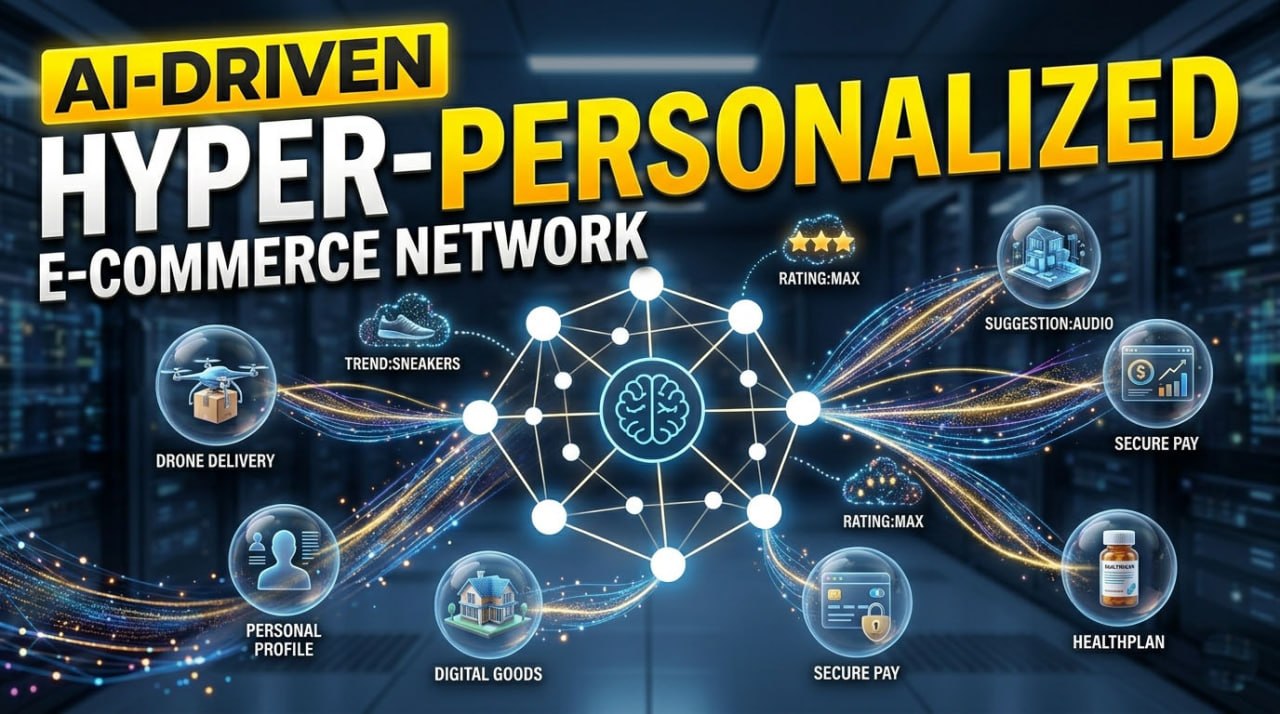
- The AI-Driven “Hyper-Personalized” E-Commerce Network
Introduction
In 2026, the era of generic, one-size-fits-all e-commerce stores has come to an end. Modern consumers now demand “Hyper-Personalized” products tailored specifically to their unique tastes, body measurements, or health profiles. Thanks to advancements in AI, you no longer need massive factories or warehouses to fulfill these demands; a solo entrepreneur can manage an automated, on-demand e-commerce network that creates custom products only when an order is placed.
Step by Step Guide
- Step 1: Niche Selection and Problem Mapping: Identify a highly specific niche where customers are desperately searching for tailored solutions (e.g., organic skincare formulated for exact skin biomes, or custom-fitted apparel for unique body types).
- Step 2: AI-Powered Product Generation: Utilize generative AI tools to instantly create 3D product designs, blueprints, and custom packaging layouts based on real-time data provided by the consumer.
- Step 3: Creating a Dynamic Storefront: Deploy AI algorithms on your website that recognize a visitor’s past behavior and preferences, dynamically altering the storefront layout, product recommendations, and visuals in real-time for that specific user.
- Step 4: Automated On-Demand Fulfillment: Connect your store’s backend to automated 3D printing facilities or print-on-demand manufacturing networks via APIs, ensuring production starts automatically the moment a customer makes a purchase.
- Step 5: Post-Purchase AI Retention: Implement custom-trained AI email workflows and chatbots to follow up on the customer’s experience, gather feedback, and intelligently recommend their next personalized product.
Tips & Warnings
- Tip: Deep Data Protection: Because you are collecting highly personal user information (like body metrics or health data), prioritize top-tier data encryption and transparent privacy policies to build customer trust.
- Warning: The Quality Trap: While AI can generate brilliant designs in seconds, if your manufacturing partners deliver low-quality physical products, your brand’s reputation will be permanently ruined.
Conclusion
E-commerce success in 2026 is not about storing massive amounts of inventory; it’s about making every single customer feel like your product was made exclusively for them. AI is the ultimate leverage that makes this level of customization profitable at scale.
FAQ Section
- Q: Do I need a massive upfront investment?
- A: Not at all. Because you are using an on-demand manufacturing model, you only pay for the production of an item after the customer has already paid you.
- Q: Will customers actually trust me with their personal data?
- A: Yes, provided you are transparent about how it is used. Modern consumers are highly willing to exchange data if it results in a perfectly customized product they cannot find anywhere else.
